
On Sept 11th, Miami Dade Commission’s Community Health Committee held a public hearing on the proposed Ordinance Creating a Heat Standard for Outdoor Workers, sponsored by Commissioners Kionne McGhee and Marlene Bastien.
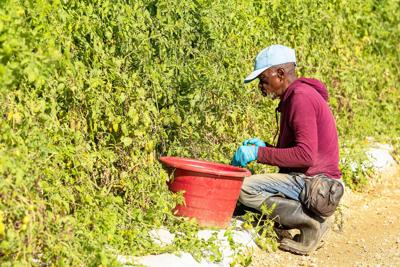
The ordinance which covers only Agricultural and Construction workers and exempts employers with less than five workers, requires employers to develop and provide to employees a Heat Exposure Safety Program, to provide training on recognition, prevention and first aid for heat injuries, to provide drinking water through the day, and to provide shade and breaks to workers when the heat index exceeds 90 degrees. It also provides for fines for violations.
During the public comment period over 55 people spoke. Representatives of both the Construction and Agricultural Industries uniformly requested that the ordinance be disapproved by the Committee or tabled pending revisions.
Their objections centered on lack of input on the development of the ordinance, duplication of safety regulation with OSHA, the singling out of only two industry groups, and assignment of responsibility and liability for violations of the ordinance among employers, contractors, and subcontractors.
Most commenters spoke in favor of the ordinance. Many of the speakers were members of or associated themselves with We Count, a non-profit, membership organization of immigrant workers and families which proposed the ordinance.
Others included union representatives, members of immigrant and climate change organizations, health care providers, and students.
Their major points included, lack of OSHA inspection and detailed regulation, increase in the number of high heat days in Miami Dade, and the need for local regulation and enforcement of heat exposure standards.
Several of the speakers recounted their personal heat injuries or those of fellow workers. Some agricultural workers recounted being denied water or breaks by their supervisors.
At the end of the comment period Commissioner McGhee, who is the Vice Chair of the committee, commented, “There is no question here that something has to be done to help our outdoor workers. Rest, shade and water are the components to survival in this heat. I’m not going to negotiate those three components.”
He also pointed out that he had submitted a substitute ordinance based on ongoing discussions between We Count and industry groups. He stated that he felt that the substitute was at about the 95% stage.
He continued, “What I’ve heard is that all sides need more time to craft out this legislation.”
He reiterated that the final version of the ordinance would be shaped by further discussion.
After several attempts to get a motion crafted to move the proposed substitute ordinance moved forward to the full commission, the committee voted 4 to 1 to do so.
Commissioner Rene Garcia based his no vote over concerns with the ordinance addressing only two industry groups and over the way liability is handled.
Sam Accursio, president of Sam S. Accursio and Sons Farms, Inc and a second-generation farmer, reached out to the South Dade News Leader with concerns about the ordinance and the Community Health Committee Meeting. We talked with him on Sunday afternoon.
Accursio began, “I sit on four agricultural boards, the most important is the county Agricultural Advisory Board where I am the Vice Chairman. I can’t understand how the plan for this ordinance was never brought to any of these for input.”
He continued, “This ordinance is just putting a layer of bureaucracy over the safety training we already do to make sure our people are safe. We train our employees to watch out for the symptoms of heat exhaustion coming on. We discuss it on a daily basis during the hot season. The ordinance mandates a 10-minute break every 2 hours in some heat conditions. We and the majority of people in my business have an open policy. If you come to a supervisor and say that you need a drink of water or a break there is nothing even talked about, you get your drink of water, you take your break or you go to the bathroom. With this ordinance it looks to me that we have to say no your break has to be at 2:10 not when you feel you need to take it.”
Accursio paused and then said, “I can’t understand how we can tell our workers, who are the backbone of agriculture, that they can’t tell when they need a break or a drink of water.”
He concluded, “We pride ourselves in the safety of our workers, otherwise we could not have stayed in business as a family farm since 1948. Many of the speakers at the committee made allegations of abuses in the agricultural industry. If I were a Commissioner, I would put together a task force to investigate and find the companies that are doing these alleged things. By putting a blanket over the entire industry, so that if others are breaking the current law, I’ll be paying for it.”
On Tuesday, Accursio added by email and text, “We in the agriculture community have to go for a no vote at the full Commission meeting. Shade, breaks, water, no problem with that, but liability issues and funding of the ordinance through fines and other issues… There is no negotiation in the ordinance that we can see.”
Barney Rutzke, owner/manager of multiple South Florida agriculture businesses released this statement, “As the President of Dade County Farm Bureau and Vice-President of the Miami-Dade Chapter of the Florida Nursery Growers and Landscape Association (FNGLA), we respectfully ask the Commissioners to vote NO on this proposed ordinance.
The new Proposed Heat Standard, as it is written, is both discriminatory, unnecessary and biased towards two industry groups. If passed, it would not only assign liability to violators, but contractors, subcontractors, other employees and possibly landowners as well. Additionally, it would open the flood gates for frivolous and unsubstantiated lawsuits.
As Agricultural employers, we recognize that our people are our biggest asset, so their health and safety is of the utmost importance. Not only do we provide water and needed/requested breaks throughout the day, but we already have heat standards, trainings and regulations in place from two agencies that focus on protecting all workers in Miami-Dade County. If a worker feels we aren’t meeting these criteria, they have the ability to report such to these agencies.
The Heat Standard for Outdoor Workers ordinance is scheduled to be heard by the County Commission at its October 17th meeting.
A video of the September 11th Community Health Committee meeting is available on the County Commission website.
Our original reporting on the ordinance was in the July 28th article, ‘Vigil held for farmworker who died from working in heat; calls for safety reforms’ is available at - southdadenewsleader.com

(1) comment
why is this all of a sudden an issue after decades of farm workers who instinctively knew how to handle it?
Welcome to the discussion.
Log In
Keep it Clean. Please avoid obscene, vulgar, lewd, racist or sexually-oriented language.
PLEASE TURN OFF YOUR CAPS LOCK.
Don't Threaten. Threats of harming another person will not be tolerated.
Be Truthful. Don't knowingly lie about anyone or anything.
Be Nice. No racism, sexism or any sort of -ism that is degrading to another person.
Be Proactive. Use the 'Report' link on each comment to let us know of abusive posts.
Share with Us. We'd love to hear eyewitness accounts, the history behind an article.