
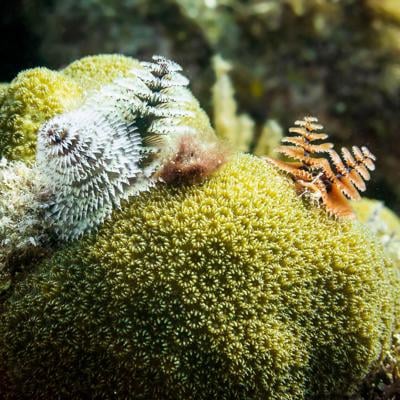
The Florida Senate is moving forward with proposals to better protect mangrove forests and clean up waters where millions of used tires were sunk in the past as part of an artificial-reef project. The Senate Environment and Natural Resources Committee on Monday backed measures to expand rules about mangroves (SB 100) and to address restoration of the artificial Osborne Reef off Broward County, where 1 million to 2 million tires were put into the ocean in the 1970s.
The Osborne Reef proposal (SB 546), filed by Sen. Bryan Avila, R-Miami Springs, would direct the Department of Environmental Protection to develop a restoration plan by July 1, 2024, that also would include cleaning natural reefs off the Broward shoreline affected by deteriorating rubber.
“We’re talking well over 1 million tires that need to be retrieved.” Avila said. “The timeframe for this tire-removal process is very extensive. … DEP is --- based upon my conversations with them --- they’re projecting 2025 or 2026 in terms of complete removal.”
In the 1970s, sinking the tires was seen as a way to attract marine life to the region. However, over time the tires corroded and many broke loose, damaging the artificial reef and nearby natural reefs.
A Senate staff report said an estimated 207,842 tires had been removed from the reef as of August 2016.
A dive operation between 2008 and 2016 using military personnel collected just under 130,000 tires. Another effort conducted by Nova Southeastern University two decades ago was able to remove about 1,600 tires at a cost of more than $17 a tire.
An assessment needed as part of the restoration effort is estimated to cost $500,000 and could take six to nine months, according to the Senate staff report.
Meanwhile, Sen. Ileana Garcia , R-Miami, for a second year is seeking to change the state’s mangrove rules to help protect barrier islands and aid restoration of Biscayne Bay.
Garcia’s proposal calls for the Department of Environmental Protection to work with local governments on identifying vulnerable coastal areas for mangrove restoration and planting efforts.
The proposal seeks to preserve an estimated 600,000 acres of mangrove forests south of Cedar Key on the Gulf Coast and Cape Canaveral on the Atlantic Coast.
While Florida since 1996 has protected mangroves from unregulated removal and destruction, the Florida Marine Research Institute said mangrove loss has reached up to 86 percent in some areas since the 1940s.
Mangroves provide natural protections against rising seas during hurricanes, absorb carbon-dioxide emissions and trap pollutants that would otherwise end up in coastal waters.

(0) comments
Welcome to the discussion.
Log In
Keep it Clean. Please avoid obscene, vulgar, lewd, racist or sexually-oriented language.
PLEASE TURN OFF YOUR CAPS LOCK.
Don't Threaten. Threats of harming another person will not be tolerated.
Be Truthful. Don't knowingly lie about anyone or anything.
Be Nice. No racism, sexism or any sort of -ism that is degrading to another person.
Be Proactive. Use the 'Report' link on each comment to let us know of abusive posts.
Share with Us. We'd love to hear eyewitness accounts, the history behind an article.