
The quintessential American summer road trip is an epic journey that unites families and friends. It’s an adventure that lets you meander through the tapestry of America's landscapes, steeped in captivating scenery, quaint towns, and timeless charm. However, behind the enticing postcard-perfect panoramas, a summer trip can quickly become dangerous if you breakdown in a remote area with extreme summer temperatures…
Gunther Mitsubishi commissioned QuestionPro to run a survey of 3,000 regular roadtrippers, and asked them to rank which routes across America they fear the most.
#1st Most Feared: US Route 285 in New Mexico
The most feared route among American roadtrippers is along US Route 285 in New Mexico. This stretch of road traverses vast areas with limited access to services and amenities. Its remoteness means that breakdowns could leave travelers stranded for extended periods before help arrives.
The route often passes through arid desert regions, where extreme temperatures can take a toll on both vehicles and individuals. Moreover, the highway stretches across long distances between towns and gas stations, increasing the risk of running out of fuel or encountering mechanical issues without immediate assistance.
#2nd Most Feared: California’s Death Valley Road (SR-190)
Unsurprisingly, California’s Death Valley Road (SR-190) came in 2nd place overall. This iconic road, while showcasing the rugged beauty of Death Valley National Park, presents several potential dangers to stranded motorists. The route traverses a harsh desert environment known for its extreme heat, with temperatures frequently soaring to dangerous levels. This can lead to overheating of vehicles and pose a significant risk to the well-being of people stranded without proper shelter or hydration.
#3rd Most Feared: Texas' US Route 90
Texas’ US Route 90 was voted as the 3rd most feared. This route often passes through arid regions, where extreme heat and unpredictable weather conditions can be a challenge, particularly during the summer months. The sparse population along certain stretches may result in longer waiting times for help to arrive. Moreover, cellular network coverage can also be unreliable in certain areas, hampering communication efforts.
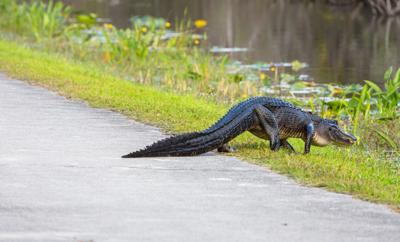
Florida's Alligator Alley (I-75) was voted as the 13th most feared road trip in the country. This iconic highway stretches approximately 80 miles across the southern part of the state, connecting Naples on the west coast to Fort Lauderdale on the east coast. The highway cuts through the heart of the Everglades, a vast and largely uninhabited swampy area. The lack of nearby towns or services means that stranded drivers may face extended periods without immediate assistance, leaving them exposed to the elements and potential hazards. Another factor to consider is the abundance of wildlife in the area, including alligators, snakes, and various species of birds. Motorists should exercise caution when outside their vehicles and avoid approaching or interacting with wildlife. Furthermore, the extreme heat and high humidity levels can pose significant health risks, especially during the summer months. Without proper provisions or shelter, people may be susceptible to dehydration, heat exhaustion, or heatstroke.

(0) comments
Welcome to the discussion.
Log In
Keep it Clean. Please avoid obscene, vulgar, lewd, racist or sexually-oriented language.
PLEASE TURN OFF YOUR CAPS LOCK.
Don't Threaten. Threats of harming another person will not be tolerated.
Be Truthful. Don't knowingly lie about anyone or anything.
Be Nice. No racism, sexism or any sort of -ism that is degrading to another person.
Be Proactive. Use the 'Report' link on each comment to let us know of abusive posts.
Share with Us. We'd love to hear eyewitness accounts, the history behind an article.