
Aging in America isn’t easy.
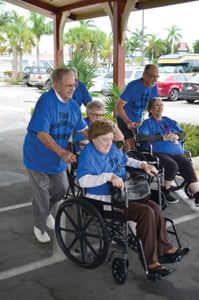
It comes with obstacles and triumphs that combine to make life full of new opportunities and rife with complex and heartbreaking realities, like learning to go on without loved ones, downsizing homes, living on downsized incomes and coming to terms with medical challenges and physical limitations.
Dr. Marie A. Bernard, deputy director of the National Institute on Aging, said the aging of the population presents vast societal challenges to make sure older people get the support they need to live healthy, independent and productive lives.
But, she added, Americans also must rethink their concepts about aging and redefine what it means to be “older” — especially since today’s older adults are very different from previous generations of older people.
“People are aging better these days than had been the case in generations past, they’re exercising regularly, getting preventative health care and remaining more engaged, so we can anticipate having a longer life span. Today’s 60 is yesterday’s 50.”
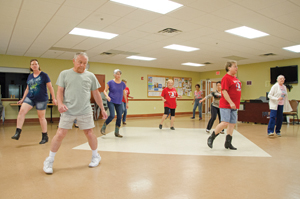
Bernard likened today’s aging population to pioneers who will shape this new stage of life. After retirement, people are returning to school, starting new careers and taking advantage of free time to volunteer and contribute in ways they couldn’t when they were in their child-rearing days, she said.
And the baby boomers — who have changed every age segment they’ve passed through — are likely to put their own stamp on the face of aging. The youngest of this group, born in the post-World War II baby boom, turns 50 this year. At 68, some of the oldest are retired or nearing that stage.
“Boomers can impact the way the aging population looks — just like they impacted social changes in the 1960s,” Bernard said.
The State of Florida Department of Elder Affairs states Florida has the highest portion of senior residents in the nation, comprising 23.6 percent of the population. Growth among older Floridians is expected to reach 41 percent by 2030.
Nationally, census reports show that people 65 years or older numbered 39.6 million in 2009 or about one in every eight Americans. By 2030, about 72.1 million people will be 65 and older or about one in every five U.S. residents.
Concern among advocates for the elderly grows as the number of seniors soars. Increasing reports of elder abuse, a sharp rise in Alzheimer’s cases and a rising demand for social services are already issues in the spotlight as county, state and national leaders grapple with how to best tackle the challenges of aging.
Meanwhile, housing costs continue to rise.
The National Institutes of Health’s report titled “Older Americans 2012” said the most significant issue affecting the growing senior population is housing costs. In 1985, about 30 percent of 65-and-older households spent more than 30 percent of their income on housing and utilities. By 2009, that had grown to 40 percent.
Out-of-pocket medical costs are growing, too.
According to a study by Fidelity Investments, a 65-year-old couple retiring in 2012 was estimated to need $240,000 to cover medical expenses throughout retirement. The 2011 figure was $230,000. In 2002, it was $160,000.
Additional challenges are emerging, too, including the increase in Alzheimer’s disease and other dementia.
Abuse — physical, financial, sexual and emotional — is also a growing problem.
Scams can occur in addition to other financial pressures already plaguing the aging population.
According to the Florida Department of Elderly Affairs, 2,729 referrals were made to the department last year from the Florida Abuse Hotline.
“Abuse, neglect and exploitation of elders is of particular concern,” the Department stated in its annual report.
The National Institute of Health shows an increase in labor force participation —especially by older women — over the last 40 years. In 1963, 29 percent of women age 62 to 64 worked outside the home; by 2011, that had jumped to 45 percent.
“Some older Americans work out of economic necessity,” according to a National Institutes of Health 2012 report. “Others may be attracted by the social contact, intellectual challenges or sense of value that work often provides.”
Even for those who can afford to leave their jobs, retirement may not come easy, one aging expert said.
Some people lack a sense of purposes after retiring, according to Steve Arnold, a professor of psychiatry and neurology at the University of Pennsylvania and the associate director of Penn’s Institute on Aging.
“We all strive for a long, healthy life where we feel we are productive. It’s important that people have some sense of purpose,” he said.
“At this time (after retirement), there can be a sense of great satisfaction and accomplishment,” he said. The key is “accepting and adapting” — especially to physical limitations that may restrict activities.
“Aside from trouble in terms of physical pain and arthritis, there are other losses in physical and mental abilities,” Arnold said. “Multitasking becomes more of a challenge. People need to give themselves more time and realize slowing down is part of a long life.”
Arnold also stressed the importance of mental and social stimulation.
“Social activities are critical to healthy aging,” he said. “We talk about the importance of mental stimulation, of exposing yourself to new things and new ideas. There is nothing more stimulating to the brain or the body than social interaction.”
Unfortunately, some people tend to withdraw as they age, he said.
“It sets up a vicious cycle,” said Arnold, who is particularly worried about suburban residents who live alone. “If the weather is not good or you don’t like to drive in the dark, people can get isolated.”
And isolation can trigger depression. A National Institute on Aging report shows that people with depression often experience higher rates of physical illness, greater functional disability, and higher health costs.
The National Institute on Aging reports that the proportion of leisure time that older Americans spend socializing and communicating — such as visiting friends or attending or hosting social events — declines with age. For those 55 to 64, about 11 percent of leisure time was spent socializing and communicating, compared with 8 percent for those 75 and over.
“Old is good,” said Dick Goldberg, national director of Coming of Age, an initiative to promote civic engagement for those who are 50 and older.
“Why is old good today? Two reasons,” said Goldberg, who travels the country spreading his group’s message. “Our array of resources and our intense search for meaning and self-expression. We have more money, more life expectancy and more opportunity.”
Yes, Goldberg said, aging “unquestionably” changes you in many ways: appearance, physical ability, memory.
“But where else do we measure anything solely on the basis of deficits?” he asked. “Net worth is a calculation of assets and liabilities. And in my world and the world of the many people age 50-plus with whom I interact, I think that net worth computation would clearly play out in our favor.”
The Florida Department of Elder Affairs has developed a statewide plan to assist seniors as they age.
“We want to foster an environment that promotes well being for Florida’s elders and enables them to remain in their homes and communities,” the Department stated. “Our vision is for all Floridians to age with dignity, purpose and independence.”

(0) comments
Welcome to the discussion.
Log In
Keep it Clean. Please avoid obscene, vulgar, lewd, racist or sexually-oriented language.
PLEASE TURN OFF YOUR CAPS LOCK.
Don't Threaten. Threats of harming another person will not be tolerated.
Be Truthful. Don't knowingly lie about anyone or anything.
Be Nice. No racism, sexism or any sort of -ism that is degrading to another person.
Be Proactive. Use the 'Report' link on each comment to let us know of abusive posts.
Share with Us. We'd love to hear eyewitness accounts, the history behind an article.