
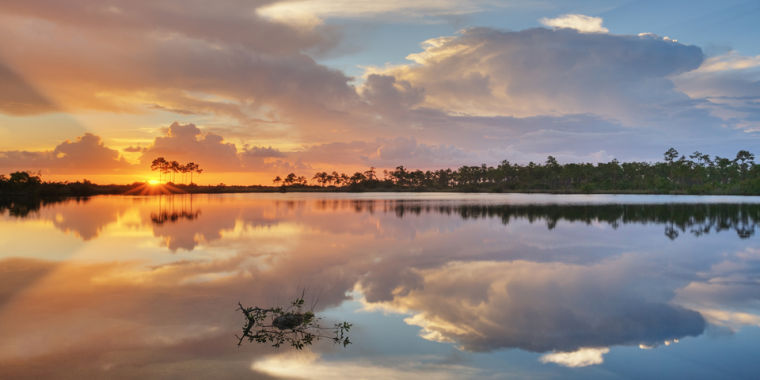
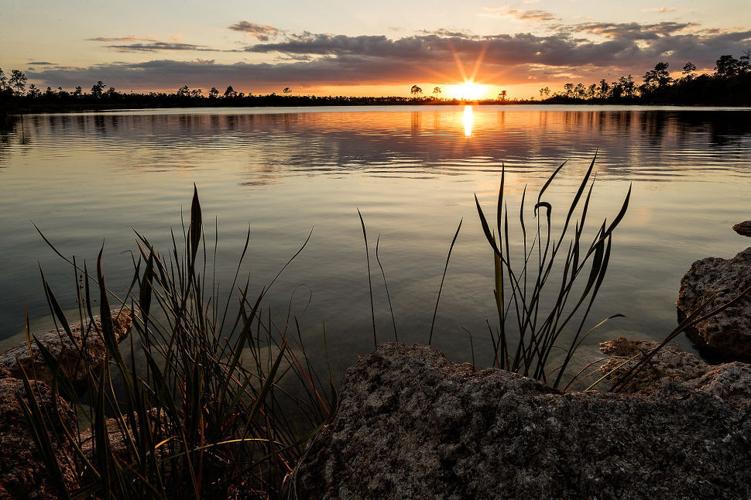
Wilderness once encircled humans. Now we encircle it. In the late 1950s and into the early 1960s, Congress had recognized that the country was losing more and more of the pristine natural areas of the American landscape and that these needed special protection so that future generations might also experience “wild” America. It took nearly 8 years, but by the end of 1963, Congress passed the Wilderness Act and President Lyndon B. Johnson signed it into law on September 3, 1964. As we approach the 50th anniversary of America’s most successful and enduring pieces of conservation legislation, it provides a reminder that nature is an important and integral part of our past and hopefully of our future.
An American legacy, the Wilderness Act provides the highest level of protection for some of our most iconic, wild landscapes. Wilderness gives each of us an opportunity to glimpse what America once was. The Wilderness Act created the legal definition of wilderness … “an area where the earth and its community of life are untrammeled by man, where man himself is a visitor who does not remain.” In a designated wilderness, roads, buildings, logging, drilling, most commercial activities, and mechanized transport are off limits. The Act ensured that the nation was committed to forever keeping the wild character of these special places and set aside more than 9 million acres. Since then, the number of protected acres has grown to nearly 110 million.
So what does Wilderness do for us? The Wilderness Society sums it up nicely.
“Wilderness is a haven from the pressures of our fast-paced society. It provides us with places where we can seek relief from the noise, haste and crowds that too often confine us. It is a place for us to enjoy with friends and families — strengthening our relationships and building lasting memories. For adventurers, it offers endless opportunities for outdoor recreation. In wilderness, we can walk and hike, watch wildlife, camp, fish and many other activities. This kind of recreation in the wild has countless proven benefits to our health and wellbeing. Yet, each year as we grow more and more connected through technology, we grow less and less connected with wilderness.”
So, who owns these millions of acres of American wildlands? You do! You own red-rock canyons, turquoise rivers, desert plains and jagged mountain peaks. You also own Arctic tundra, southern wildflower fields and pinelands and cypress forests. All these iconic wild places are part of your great American backyard. If you live here in south Florida, you own, as an American citizen, 1.3 million acres of designated wilderness - the Marjorie Stoneman Douglas Wilderness set aside by Congress in November of 1978.
As America’s only subtropical wilderness, the Marjory Stoneman Douglas Wilderness is a mosaic of unparalleled diversity. It provides refuge for fourteen endangered and nine threatened species, such as the manatee, crocodile and Florida panther.
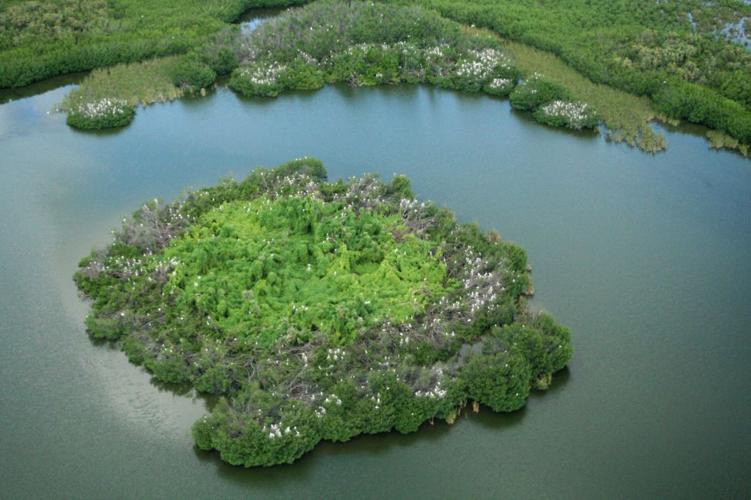
South Florida ranks among the nation’s fastest growing urban areas, but harbors remarkable wilderness. Co-existing next to six million residents, the Marjory Stoneman Douglas Wilderness Area preserves nearly 1.3 million acres of marine estuary, mangrove and cypress forests, hardwood hammock, and sawgrass prairies. It’s the largest wilderness east of the Mississippi River.
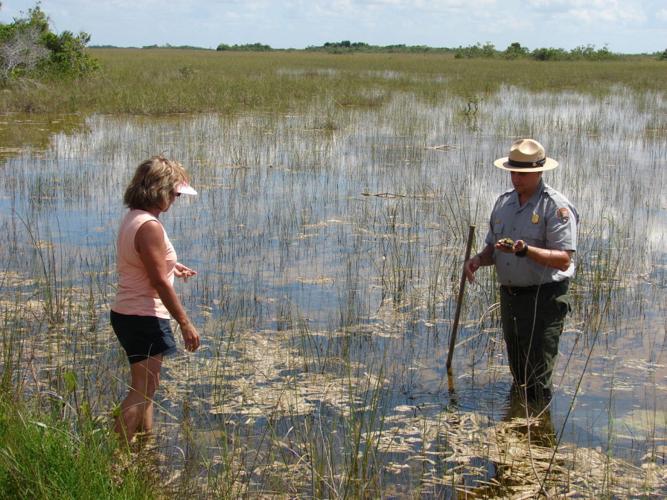
Approximately 86 percent of Everglades National Park has been designated the Marjory Stoneman Douglas Wilderness. As the largest wilderness east of the Rocky Mountains and the only subtropical wilderness in the United States, this offers a unique opportunity for present and future generations to explore the unique wilderness of the Everglades! This wilderness is unusual, however, in that nearly one-third of its acreage is submerged. Although the sea floor that underlies coastal park waters is designated wilderness, the water column itself is not. This provision allows for the continued use of motorboats in these areas, provided such usage does not impact the wilderness.
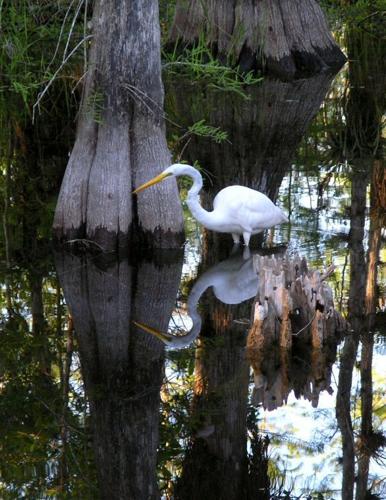
Not only does wilderness afford incredible outdoor experiences for two legged critters, it is also an important habitat for plants and animals. The mosaic of habitats contained within the greater Everglades supports an assemblage of plant and animal species not found anywhere else on planet Earth! Although nine distinct habitats have been identified in the park, the landscape changes so subtly that they transition into one another almost imperceptibly. The nine identified habitats of the park include hardwood hammock, pineland, mangrove, coastal lowlands, freshwater slough, freshwater marl prairie, cypress, marine, and estuarine.
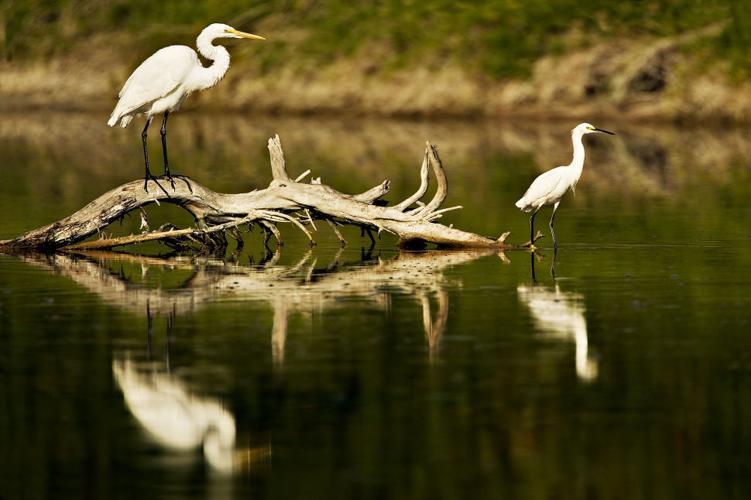
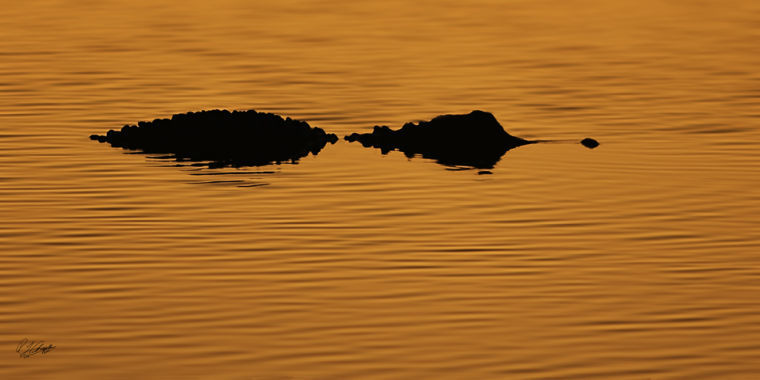
The park is also home to a vast array of animals that have adapted to a subtropical environment in which temperate climatic conditions, characteristic of latitudes to the north, merge with tropical Caribbean conditions. The winter dry season, which lasts from December to April, is the best time for wildlife viewing in the park. Weather conditions are generally pleasant during the winter and standing water levels are low, causing wildlife to congregate at central water locations. Shark Valley, the Anhinga Trail at Royal Palm, and Eco Pond in the Flamingo area are popular areas for viewing alligators, wading birds, and other wildlife. Boaters have additional access to wildlife viewing opportunities in Florida Bay and along the Gulf Coast.
Locally, the Marjorie Stoneman Douglas Wilderness and the park also contribute to the economy and way of life here. On average, nearly a half million visitors enter the park through the homestead entrance, a half million through the Shark Valley entrance and untold thousands in Florida Bay and the 10,000 Island are of the Gulf Coast area of the park each year. That’s a lot of visitors that are part of the tourism industry of south Florida that support a broad range of local businesses as well. In 2012 alone, nearly 1.2 million visitors to the park spent approximately $103 million in neighboring communities. The ripple effect of this spending also supported 1400 jobs in those same communities. (Source 2014 Report of USDOI - 2012 National Park Visitor Spending Effects)
So, I encourage all you reading this article to make a plan to get outdoors and reconnect with nature in your wilderness! A south Florida wilderness experience could be as simple as getting in your car and traveling a short distance from Homestead, Miami or Naples to enter the largest designated wilderness east of the Rocky Mountains – Everglades National Park. Here you can experience what the night sky’s might have been like when Florida was wild and actually see the millions of stars popping out against an inky black sky. Whether you visit during the day or at night, the sound of silence is almost deafening punctuated only by the soft sounds of nature; crickets chirping, frogs and alligators bellowing in the distance, birds calling to each other all add their sounds to the backdrop of this experience with nature. Note that visiting this particular wilderness can take some thoughtful planning so your memories are one of quiet and calm, not running for cover from pesky mosquitoes. Year round there is a place in the Everglades where you can visit and enjoy the wonders of this international treasure.
Linda Friar is chief of public affairs for Everglades and Dry Tortugas National Parks.

(0) comments
Welcome to the discussion.
Log In
Keep it Clean. Please avoid obscene, vulgar, lewd, racist or sexually-oriented language.
PLEASE TURN OFF YOUR CAPS LOCK.
Don't Threaten. Threats of harming another person will not be tolerated.
Be Truthful. Don't knowingly lie about anyone or anything.
Be Nice. No racism, sexism or any sort of -ism that is degrading to another person.
Be Proactive. Use the 'Report' link on each comment to let us know of abusive posts.
Share with Us. We'd love to hear eyewitness accounts, the history behind an article.