
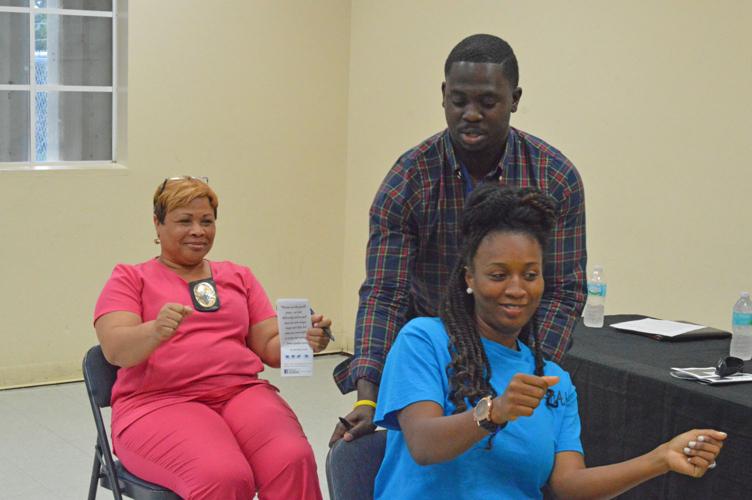
A stylish blue and white Corvette was recently pulled over by a police car inside the FloridaCityCommunity Center. The discerning eye would have noticed the vehicles looked a lot like chairs and the drivers a lot like volunteers from an audience.
The improvisational scene wasn't some mundane act from a tired comedy troupe, but an attempt by a police department to overcome the negative national coverage officers have received in the media lately and connect with the community they are sworn to protect.
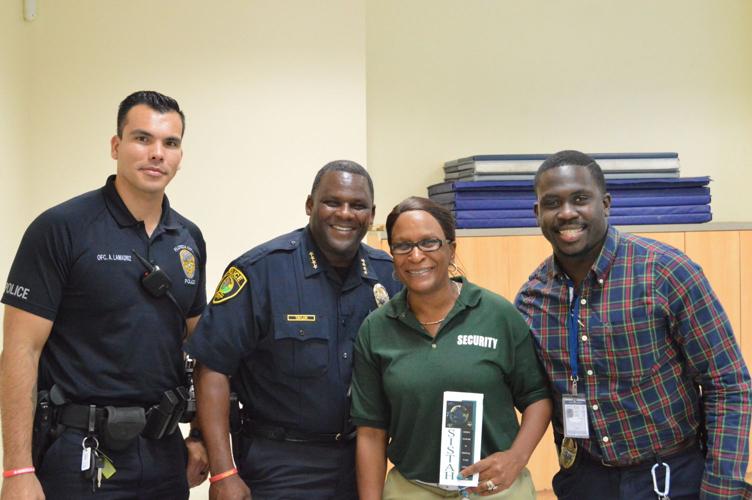
Members of the Florida City Police Department teamed up with the Florida City Chapter of S.I.S.T.A.H. , Sisters Involved in Sharing through Truth Action and Healing, to create a forum where citizens could get informed on the proper way to deal with the police.
As stories and images flood the news cycle of minorities meeting grim ends after violent interactions with police officers, both organizations in minority-heavy FloridaCity proactively came together to help avoid those scenarios in South Dade.
"We felt the need to have an event like this with all the negativity in the news about police officers in different communities," said S.I.S.T.A.H. Member Anita Moore. "We are not here to bash or finger point but to empower."
Florida City Police Chief Pedro Taylor lead from the officer's perspective.
At a Routine Traffic Stop:
For instance in that stop with the corvette, Taylor said the officer is always weary of where a person's hand is-as that is what will potentially take his life if things go south. A veteran cop knows if a driver is nervous and looking back or shifting around as the car will ever so slightly start to shake. An officer will position himself outside of your window as to draw you out to him so he could more easily observe you.
The advice is to be polite, as the officer will often mirror your level of aggression in order to stay in control.
If you don't have access to your driver's license, simply give the officer your name and date of birth- their systems should be able to positively identify you with that information.
Proper Way to Go For Your I.D
Slow controlled movements to your pocket, glove compartment, or anywhere else your license and registration may be.
If you have gun, let the officer know ahead of time. Make sure the gun is properly stored up to state regulations.
You are compelled by state statues to identify yourself if you are driving.
A Safe Place To Pull Over
A mother in the audience had teenage daughters who drive. She always told them to find a lit place with plenty of foot traffic to pull over in order to not be a victim to the possible inappropriate advances of a police officer.
Taylor said a simple acknowledgment that you are finding a safe place to pull over should be sufficient.
"They know," said the Chief.
The mother was not satisfied with the answer and asked again when the officers said that in most stops the officer has control over the civilian. So what is to stop them from doing something inappropriate asked the mother?
"If you didn't do anything you don't have to worry about it," said Taylor. "Very hard to put something on someone."
"Trust me you will have the opportunity to complain," he said. "If something is out of the normal, or wrong...don't do it."
The News Leader asked what happens when an officer does something wrong and unjust to a civilian, what resources does the public have.
Reporting Officer Misbehavior
File a formal complaint said the chief. Then find as much evidence to corroborate your story.
"The biggest thing is the location and time," said Taylor. "Be as observant as possible. See if you have a witness."
Taylor says he tells his officers that big brother is watching because cameras are everywhere. In the meeting he told the audience that they shouldn't worry because cops abusing their positions would be caught.
Though at the very least every complaint will be looked at, seriously.
"Come to work and go home, no one is trying to give up their badge that easily," said the Chief.
Recording The Police
Taylor says that is fine as long as it doesn't interfere with police work. When it comes to the media, police departments usually set up a location where journalists could film from.
When dealing with the general public recording an officer- there are no restrictions as long as they don't get away.
Taylor said his officers are constantly being retrained as departments seek to keep up with increasing technology.
Body Cameras
Taylor said he had no problems with them except that they are "as expensive as the devil."
Workshop
The night continued with more personalized questions from the audience, most were pleased with the answers they heard.
"These gentlemen put their lives on the line to serve and protect" Moore said.

(0) comments
Welcome to the discussion.
Log In
Keep it Clean. Please avoid obscene, vulgar, lewd, racist or sexually-oriented language.
PLEASE TURN OFF YOUR CAPS LOCK.
Don't Threaten. Threats of harming another person will not be tolerated.
Be Truthful. Don't knowingly lie about anyone or anything.
Be Nice. No racism, sexism or any sort of -ism that is degrading to another person.
Be Proactive. Use the 'Report' link on each comment to let us know of abusive posts.
Share with Us. We'd love to hear eyewitness accounts, the history behind an article.