
In 2015, there are more than 2.8 million women with a history of breast cancer in the U.S. This includes women currently being treated and women who have finished treatment.
Initially, breast cancer may not cause any symptoms. A lump may be too small for you to feel or to cause any unusual changes you can notice on your own. Often, an abnormal area turns up on a screening mammogram (X-ray of the breast), which leads to further testing.
Swelling of all or part of the breast, skin irritation or dimpling, breast pain, nipple pain or the nipple turning inward, redness, scaliness, or thickening of the nipple or breast skin, a nipple discharge other than breast milk or a lump in the underarm area. These are all symptoms of breast cancer in women that may or may not appear.
The American Cancer Society estimates for breast cancer in men in the United States for 2015 are about 2,350 new cases of invasive breast cancer will be diagnosed and approximately 440 men will die from breast cancer.
On April 21st, 2011 the Florida House of Representatives adopted by publicationHR-9105
to establish October 17th to 23rd as MBC Awareness Week in Florida.
Breast cancer is about 100 times less common among men than among women. For men, the lifetime risk of getting breast cancer is about 1 in 1,000. The number of breast cancer cases in men relative to the population has been fairly stable over the last 30 years.
Breast lumps or swelling. Nipple inversion. Nipple discharge (sometimes bloody). A pain or pulling sensation in the breast. Skin puckering or dimpling. Scaliness or redness of the breast skin or the nipple. If any of the above are noticed in a man’s body, it should immediately be checked out by a doctor as these are the most noticeable symptoms of breast cancer.
The term “breast cancer” refers to a malignant tumor that has developed from cells in the breast. Usually breast cancer either begins in the cells of the lobules, which are the milk-producing glands, or the ducts, the passages that drain milk from the lobules to the nipple. Less commonly, breast cancer can begin in the stromal tissues, which include the fatty and fibrous connective tissues of the breast.
For women in the U.S., breast cancer death rates are higher than those for any other cancer, besides lung cancer.
Besides skin cancer, breast cancer is the most commonly diagnosed cancer among American women.
In 2015, it's estimated that just under 30% of newly diagnosed cancers in women will be breast cancers.
Actress Shannen Doherty, celebrity chef Sandra Lee, Joan Lunden and Giuliana Rancic are just a few famous women who have fought breast cancer. On the other end, actor Richard Roundtree, footballer Ernie Green and Peter Criss of the band “Kiss” are famous men who have also fought the battle.
Angelina Jolie’s double mastectomy has improved public awareness of breast cancer, according to a new report, with research also suggesting women are now better informed about breast reconstruction options since the actress and activist went public with her cancer diagnosis in 2013.
Jolie made the announcement that she would undergo the surgery (and a reconstructive operation) after learning she carried a genetic mutation that increased her likelihood of being diagnosed with breast cancer further down the line. It was a brave choice for a very public figure.
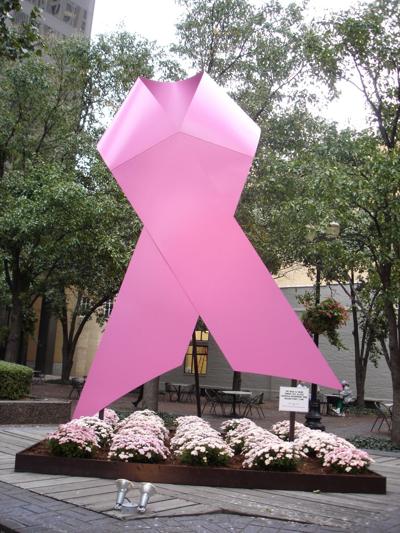
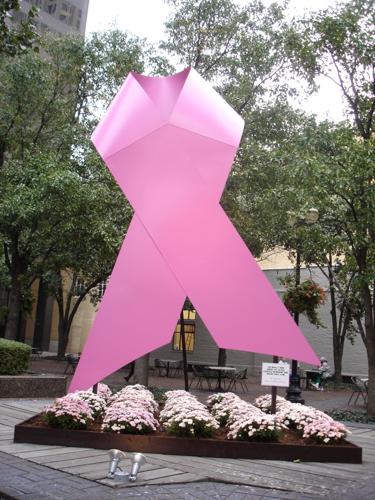
Breast cancer shows no discrimination. It attacks the young, the old, male and female. Those who fight the battle know that they have many brothers and sisters under the pink and blue intertwined ribbon with which to share their stories and gain encouragement and support.

(0) comments
Welcome to the discussion.
Log In
Keep it Clean. Please avoid obscene, vulgar, lewd, racist or sexually-oriented language.
PLEASE TURN OFF YOUR CAPS LOCK.
Don't Threaten. Threats of harming another person will not be tolerated.
Be Truthful. Don't knowingly lie about anyone or anything.
Be Nice. No racism, sexism or any sort of -ism that is degrading to another person.
Be Proactive. Use the 'Report' link on each comment to let us know of abusive posts.
Share with Us. We'd love to hear eyewitness accounts, the history behind an article.