
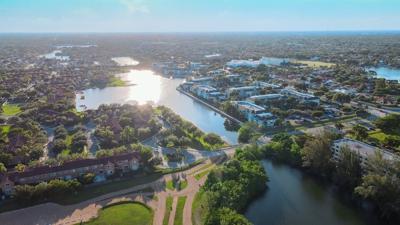
There is a particular feeling to Cutler Bay that is difficult to capture in a planning document.
It is the familiarity of seeing the same families at the park, the canopy along Old Cutler Road, children growing up in the same neighborhoods their parents remember, and the strange comfort of running into someone you know while doing something as ordinary as grocery shopping.
It is Saga Bay and Whispering Pines, Lakes by the Bay and Cutler Ridge. It is schools, parks, backyard birthday parties, youth sports, long-established neighborhoods and the sense that, despite being part of a metropolitan area of nearly three million people, this still feels like a town.
That feeling matters.
And right now, Cutler Bay is entering a period when we need to think seriously about how we protect it.
Not because change is coming someday.
Because change is already here.
Southland Mall, a place woven into the memories of generations of South Dade residents, is being transformed into Southplace City Center. Plans for the massive mixed-use redevelopment include thousands of residences alongside retail, restaurants, entertainment, a hotel, medical facilities and public gathering spaces. Construction on the first phase is already underway.
At the same time, Cutler Bay is preparing for another transformational project on the opposite side of town. The 16-acre Legacy Park and Municipal Complex is planned to include a new Town Hall, police station, community center and park.
And along the South Dade TransitWay, Miami-Dade County is examining transit-oriented development opportunities surrounding stations throughout the corridor, including areas that touch Cutler Bay.
Any one of these projects would be significant.
Together, they raise a much larger question:
What should Cutler Bay become?
For some residents, even asking that question can be uncomfortable. There is a legitimate fear that “growth” becomes shorthand for taller buildings, more traffic, more congestion and the gradual disappearance of the community people chose to call home.
That concern should not be dismissed as resistance to progress.
In fact, preservation is part of Cutler Bay’s DNA.
When residents fought for incorporation, they were not simply trying to create another layer of government. The Town’s own history describes incorporation as a fight for a government that was closer and more responsive to residents and, importantly, for the ability to preserve the community people already knew and loved. Cutler Bay residents voted to incorporate in 2005.
Twenty-one years later, that original purpose deserves to be remembered.
But preserving a community does not necessarily mean freezing it in time.
Sometimes preservation requires planning for change before change makes the decisions for us.
That is the crossroads Cutler Bay faces.
The choice should not be between becoming a dense urban center and putting a wall around the town exactly as it exists today. Neither is realistic, and neither captures what makes this community special.
There is another option.
Cutler Bay can grow in a way that becomes more distinctly Cutler Bay, not less.
That begins with deciding what is nonnegotiable.
Established residential neighborhoods should remain neighborhoods. Parks and green space should be treated as essential community infrastructure. Our tree canopy, environmental resources and relationship with Biscayne Bay should influence how we build. New development should account for flooding and drainage rather than leaving tomorrow’s residents to solve today’s planning mistakes. Schools, recreation and family infrastructure should be considered alongside housing and commercial development.
Most importantly, growth should have to earn its place here.
Every major project should force us to ask: What does this give back to the community?
Does it improve mobility?
Does it create public space?
Does it make it easier for residents to walk, bike or reach transit?
Does it strengthen local businesses?
Does it contribute to infrastructure?
Does it create places where residents actually gather?
Does it make daily life in Cutler Bay better?
If the only answer is that a project adds more people, more cars and more tax revenue, that is not enough.
This is also where Cutler Bay has an opportunity many older communities do not.
We do not have to recreate someone else’s idea of a downtown.
Southplace can emerge as a major commercial and mixed-use center without requiring every neighborhood around it to change. Legacy Park can become a civic and community gathering place without turning Old Cutler Road into Brickell. Our parks can continue serving as smaller neighborhood centers where relationships are formed at playgrounds, pickleball courts, walking paths, ballfields and community events.
The goal should be connection between these places, not sameness among them.
That means we should pay as much attention to what happens between our major projects as we do to the projects themselves.
How does a teenager get from home to a park or after-school activity?
How does an older resident reach a community program?
Can someone living near the TransitWay safely reach it without getting into a car?
Can families move around town without every short trip requiring US-1?
Can residents east and west of major corridors feel equally connected to the civic life of Cutler Bay?
Those questions may sound smaller than billion-dollar developments and municipal complexes.
They are not.
They determine whether growth produces a collection of projects or projects or a community.
And they get to something deeper about the future of Cutler Bay.
A town is not preserved simply because the houses remain standing.
We preserve a place when we preserve the relationships, routines, spaces and experiences that make people feel rooted there.
Cutler Bay has already demonstrated that it values those spaces. The Town maintains parks ranging from large regional-style facilities such as Lakes by the Bay Park to small neighborhood parks like Whispering Pines, which has served as a gathering place for its community for generations.
Those places tell us something about what people value here.
So does the resistance that sometimes accompanies proposals for greater density or development.
Instead of treating that resistance as an obstacle, we should listen carefully to what residents are actually trying to protect.
Often, it is not a building height or a zoning designation.
It is a way of life.
The task of good planning is to translate that feeling into policy.
Protect neighborhoods. Concentrate greater intensity where infrastructure and transit can support it. Require thoughtful transitions between large developments and existing homes. Invest in mobility inside the town. Protect green space. Plan for schools and families. Demand excellent public spaces. Treat resilience as infrastructure. And make sure residents can clearly see what their community receives in return when significant development occurs.
That is not anti-growth.
It is intentional growth.
There is something fitting about Cutler Bay confronting this question now.
The generation that fought for incorporation believed decisions about this community should be made closer to the people who lived here.
They succeeded.
Our responsibility is to make good use of what they created.
Twenty-one years after incorporation, we no longer have to fight for the right to determine Cutler Bay’s future.
We have that right. Now comes the harder part: deciding what is worth preserving, what should change, and having the discipline to know the difference.
Because twenty years from now, Cutler Bay will almost certainly look different.
The measure of our success should not be whether we prevented that change.
It should be whether, after all that change, it still feels like home.

(0) comments
Welcome to the discussion.
Log In
Keep it Clean. Please avoid obscene, vulgar, lewd, racist or sexually-oriented language.
PLEASE TURN OFF YOUR CAPS LOCK.
Don't Threaten. Threats of harming another person will not be tolerated.
Be Truthful. Don't knowingly lie about anyone or anything.
Be Nice. No racism, sexism or any sort of -ism that is degrading to another person.
Be Proactive. Use the 'Report' link on each comment to let us know of abusive posts.
Share with Us. We'd love to hear eyewitness accounts, the history behind an article.